
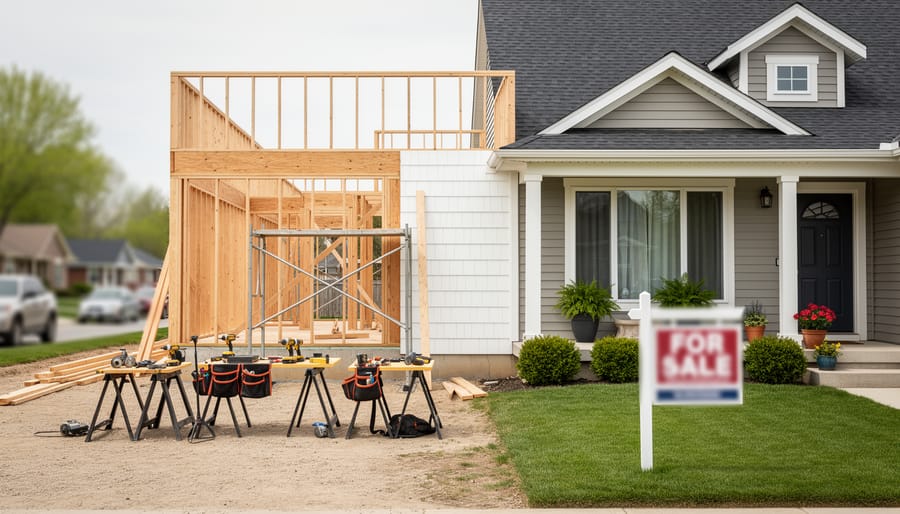
Building a new custom home while your current house sits unsold is entirely possible with the right financing strategy and timeline coordination. The key is securing a construction loan with a contingency plan, typically either a bridge loan to cover both mortgages temporarily or a builder who offers flexible occupancy terms that align with your home sale closing. Most families who successfully navigate this transition work backward from their new home’s completion date, listing their existing property 4-6 months before move-in to create a selling window that minimizes carrying two properties.
The challenge isn’t whether you can do both simultaneously, but rather how to structure the finances so you’re never stretched dangerously thin. We’ve guided dozens of families through this exact journey, and the ones who succeed all follow a similar pattern: they secure pre-approval that accounts for both properties, they build cash reserves for overlap periods, and they understand precisely when each domino needs to fall. The stakes are high because poor timing can leave you house-rich but cash-poor, stuck making two mortgage payments while watching your savings evaporate.
This roadmap walks you through the complete process, from securing the right financing instruments to coordinating closing dates with surgical precision. You’ll learn the exact order of operations, the financial thresholds lenders require, warning signs that you’re veering off course, and backup plans for when your house doesn’t sell as quickly as projected. For those needing guaranteed timelines, companies that buy houses for cash uk offer one alternative worth exploring alongside traditional listings.
What You Need Before You Start: Essential Resources and Planning Tools
Before you start coordinating your build and sale, you need the right documents and planning tools in place. Having everything organized from day one prevents delays, reduces stress, and gives you confidence as you move through both processes simultaneously.
Start by gathering your financial documentation. You’ll need recent pay stubs, two years of tax returns, current bank statements, and a detailed breakdown of your existing mortgage balance and payment history. Request a professional home valuation or comparative market analysis for your current property, you need an accurate equity assessment, not just what you think your home is worth. Get pre-qualified for a construction loan and explore bridge loan options with at least two different lenders so you can compare terms and understand your borrowing capacity.
Your essential planning toolkit should include:
- Pre-approval letters from construction and bridge loan lenders with specific amounts and terms
- Current credit report showing your score and any items that need addressing
- Detailed equity calculation for your existing home (market value minus outstanding mortgage)
- Construction timeline template from your builder showing key milestones and completion dates
- Real estate market analysis for your area, including average days on market and seasonal trends
- Contingency fund plan covering at least three to six months of dual housing costs
- Contact information for coordinated team members: builder, real estate agent, loan officer, attorney
- Draft timeline showing your ideal sequence of events from groundbreaking to both closings
Beyond the paperwork, you need the right professionals. Interview custom home builders who have experience coordinating timelines with existing home sales, builders like Heartland Custom Homes who understand the importance of staying on schedule. Select a real estate agent who grasps your situation and can market your home with flexible closing dates. Make sure your loan officer, builder, and agent communicate with each other, not just with you.
Create a master coordination document that tracks both timelines side by side. This living document becomes your roadmap, showing where construction milestones need to align with sale benchmarks and where you have flexibility if one process moves faster than the other.
Important Considerations and Warning Signs to Watch For

Before you commit to building and selling simultaneously, understand the financial exposures that can turn this strategy from smart to stressful. The most dangerous scenario is carrying two mortgages if your current home doesn’t sell before your new construction completes. Even with strong income, lenders typically won’t approve a new construction loan unless your debt-to-income ratio can support both payments, and that assumes you qualify for bridge financing or a construction loan with contingencies.
Appraisal and valuation estimates matter more in this scenario than in traditional moves. If you overestimate your current home’s value by even 10%, you might not extract enough equity to fund your new build, forcing you to renegotiate with your builder or scramble for additional financing mid-project. Work with a real estate agent who provides comparative market analyses based on recent sales, not aspirational pricing.
Construction delays represent another critical vulnerability. A three-month delay, common in custom builds, can mean three additional months of double housing costs if your old home sells on schedule. Thorough build cost planning includes contingency funds not just for construction overruns, but for carrying costs if timelines slip.
Watch for these warning signs that this approach isn’t right for your situation: minimal equity in your current home (less than 20%), tight monthly cash flow that leaves no margin for dual payments, unstable local real estate markets, or builders who can’t provide fixed completion dates. If you’re considering a custom build that includes features like the multigenerational tax credit factor those timeline requirements into your risk assessment too.
Pause and reconsider if your current home needs significant repairs before listing, if local market inventory suggests a six-month-plus selling timeline, or if your builder can’t coordinate with your real estate team. The simultaneous approach works beautifully when everything aligns, but forcing it when conditions aren’t right creates unnecessary financial pressure.
Your Step-by-Step Process: From Planning to Move-In
Step 1: Assess Your Financial Position and Get Pre-Approved
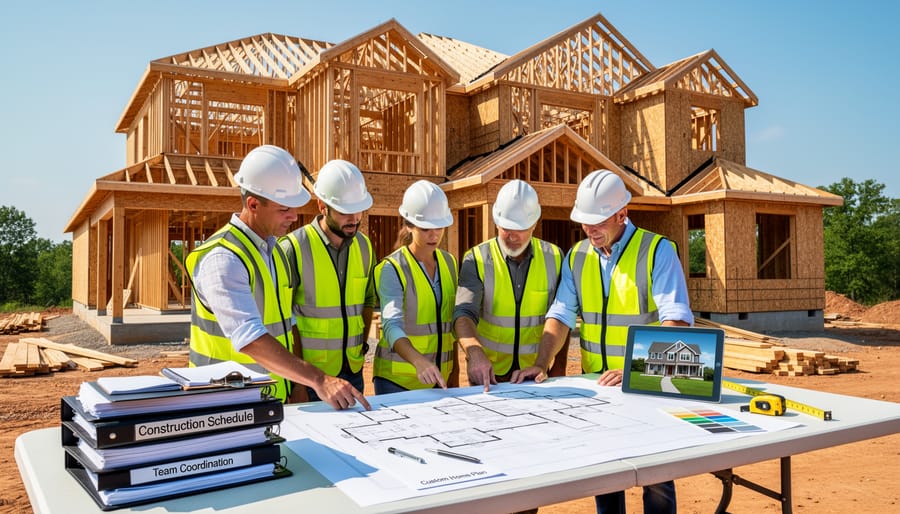
Start by requesting a comprehensive home equity assessment from your lender, you need to know exactly how much value you’ve built in your current property. Most families are surprised to discover they have more equity than expected, which becomes your foundation for the entire process. Ask your lender to calculate your available equity assuming you’ll sell at current market value, then subtract 6-10% for selling costs and any remaining mortgage balance.
Next, develop a realistic construction budget with your builder that accounts for every detail, from permits and site preparation through final finishes. Construction loan qualifying and timing differs from traditional mortgages, so explore all three financing paths: construction-to-permanent loans that convert to your final mortgage, bridge loans that cover the gap between purchase and sale, or home equity lines that tap your current property’s value. Each option has distinct qualification requirements and timeline implications.
Schedule pre-approval meetings with at least two lenders who understand simultaneous transactions. Bring tax returns, pay stubs, current mortgage statements, and your construction contract. The lender needs to see your full picture, existing debt, projected sale proceeds, construction costs, and permanent housing payment. If you’re planning winter home construction factor that timeline into your financing approval window, as rate locks typically last 60-90 days.
Step 2: Choose Your Custom Home Builder and Finalize Plans
Your builder choice makes or breaks this process. Look for a custom home company with proven experience coordinating construction timelines around home sales, builders who’ve navigated these dual transactions understand the pressure points and can adjust schedules when your closing date shifts unexpectedly.
During your initial consultations, ask directly: “How many clients have you worked with who were selling simultaneously?” Request references from families who’ve done exactly what you’re attempting. A builder like Heartland Custom Homes brings this specific expertise, helping you set milestone dates that align with realistic sale scenarios rather than optimistic fantasies.
Finalize your home design before listing your current property. Complete floor plans, select major finishes, and lock in specifications that reflect your family‘s needs, from room layouts to systems like whole-house water filtration. Design changes mid-construction derail timelines and budgets when you’re juggling a sale.
Your construction contract needs explicit contingency language. Include clauses addressing what happens if your home sells faster than expected (can you accelerate the build?) or slower (what’s the payment structure if you need to pause?). Establish milestone dates tied to realistic market conditions in your area, typically 90-120 days for the sale, 6-8 months for construction. Get this timeline in writing, with clear communication protocols for updates between your builder, real estate agent, and lender.
Step 3: Prepare Your Current Home for Market
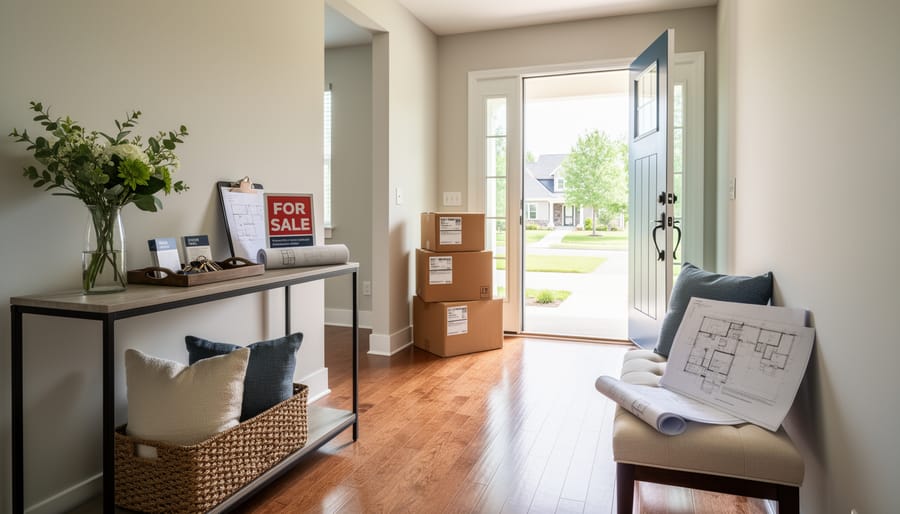
Getting your current home ready for sale while building a new one requires a different approach than a traditional sale. You’re not racing to move out, you’re orchestrating a timeline that gives you control over both transactions.
Start by interviewing real estate agents who’ve handled simultaneous build-and-sell situations. You need someone who won’t pressure you into the first offer if your construction timeline needs more runway. The right agent understands that your closing date isn’t flexible until your new home nears completion, and they’ll structure your listing accordingly.
Timing your listing matters more than you might think. Most families list 3-4 months after breaking ground, giving construction enough progress that you can predict your move-in window with reasonable accuracy. List too early and you’re negotiating blind; wait too long and you’re rushing buyers who need certainty.
Make strategic improvements that boost sale price without draining the budget you need for your new build. Fresh paint, updated fixtures, and a deep clean deliver strong returns. Skip expensive renovations, you’re building your dream features into the new house anyway.
Stage your home while you’re still living there by decluttering aggressively. Pack up half your belongings as if you’re already moving. Buyers need to envision their life in your space, and that’s impossible when every surface tells your story. Store seasonal items, excess furniture, and personal collections. Your home should feel lived-in but not crowded.
Price realistically based on your construction schedule, not wishful thinking. Build in negotiating room for closing date flexibility, it’s your most valuable bargaining chip.
Step 4: Break Ground and List Your Old Home Strategically
Once construction begins, your builder will typically need two to four weeks to establish visible progress, foundation work, framing starts, or significant site activity. This visible milestone gives potential buyers confidence that your new home is truly underway, making them more comfortable with flexible closing terms.
List your current home within those first few weeks, not before breaking ground. If you list too early and construction faces weather delays or permit hiccups, buyers lose patience and your negotiating position weakens. Your agent should frame the listing to emphasize the advantage: “Sellers building custom home, flexible closing available.”
Managing showings while living there requires discipline. Keep your home show-ready daily, maintain curb appeal, and be prepared to leave on short notice. Your agent should communicate your build timeline to prospective buyers upfront, positioning the wait as an opportunity rather than an inconvenience, they get time to sell their own home or secure financing while you finish construction.
Negotiate sale contingencies that protect both parties. Common structures include a closing date tied to your new home’s certificate of occupancy plus 30 days, or a range window with penalties if you close earlier or later. Keep your builder informed of offer activity, if someone makes a strong offer requiring a tight timeline, your builder needs to know immediately so they can adjust schedules or advise on feasibility. Regular three-way updates between you, your agent, and your builder prevent surprises. Your builder’s project manager should confirm construction waste disposal and site logistics stay on schedule, giving your agent accurate information to share with buyers.
Step 5: Navigate Offers and Construction Progress Simultaneously
Once offers start arriving on your current home, you’ll need to evaluate them through a completely different lens than a typical sale. The highest offer isn’t necessarily your best option, you need a buyer who understands and can accommodate your construction timeline.
Look for buyers with flexible closing dates or those willing to include contingencies that align with your build milestones. A buyer offering $10,000 less but agreeing to close when your new home reaches final inspection might be worth far more than a higher offer demanding a 30-day close. Your real estate agent should present your unique situation upfront, attracting buyers who can work with your schedule rather than against it.
Stay in constant communication with your builder during this phase. Weekly construction updates become critical as you negotiate terms. If your builder flags a potential delay, you can adjust your counteroffer timeline accordingly. If construction accelerates ahead of schedule, you might accept a faster closing date.
When your home sells faster than expected, discuss temporary housing options or negotiate a rent-back agreement where you lease your old home from the buyer for a defined period. If construction hits delays and your sale moves forward, a rent-back becomes essential. When your home sells slower than anticipated, you might need to extend your construction loan or adjust your new home’s closing date with your lender.
Keep your mortgage lender informed of all developments. They’ll need to coordinate final approval timing with both your sale proceeds and construction completion.
Step 6: Coordinate Your Transition and Final Closings
The final weeks demand precision timing and nerves of steel. Start by scheduling your new home’s final walkthrough seven to ten days before your planned move-in date. Walk through with your builder, testing every outlet, faucet, and door lock. Document any punch-list items in writing and confirm completion dates that won’t interfere with your transition.
Closing sequence matters enormously. Ideally, close on your new home two to three days before closing on your old house. This cushion lets you move belongings directly without storing them or scrambling for overnight accommodations. If your sale closes first, arrange temporary housing immediately, staying with family, short-term rentals, or extended-stay hotels. Have this backup plan confirmed weeks in advance, not days.
Coordinate with both title companies to align closing times. Morning closings on your new home give you afternoon access for deliveries and initial setup. Schedule your old home’s closing after you’ve moved essentials out but before your buyers’ possession deadline.
Complete final inspections on your old house before the buyers’ walkthrough. Fix any items that could delay closing. Simultaneously, ensure your builder obtains the certificate of occupancy for your new home, you cannot close without it.
Transfer utilities for both properties on staggered dates. Keep old house services active through your final day there, and activate new home services two days before move-in. Update your address with the post office, banks, and insurance companies once your new closing is confirmed. This orchestrated sequence turns potential chaos into a manageable transition.
How to Know You’ve Made the Right Decisions: Verification Checkpoints
Throughout this dual process, regular checkpoints help you stay confident you’re making sound decisions. Rather than waiting until problems escalate, evaluate these key indicators at each phase to catch issues early.
Your financial health deserves weekly attention during this journey. Check that your combined housing expenses don’t exceed 28% of gross income, even temporarily. If your old house hasn’t sold yet and construction costs are mounting, this ratio will creep upward. Run the numbers every Friday. When you see it approaching 35%, that’s your signal to accelerate the sale timeline or explore bridge financing options you’ve already researched.
Timeline alignment matters just as much as money. Compare your builder’s progress reports against the original schedule each month. Minor delays happen, but if framing takes three weeks longer than projected, your entire coordination plan shifts. Mark your calendar for major milestones, foundation complete, framing done, mechanical rough-in finished, and verify actual completion dates match your contract within a two-week window.
The market feedback on your old house tells you whether your pricing strategy works. If you’ve had ten showings but zero offers after three weeks, something’s misaligned. Compare your price against the three most recent sales in your neighborhood. Adjust quickly rather than waiting for the “right buyer” while construction bills accumulate.
Finally, monitor your family’s stress and decision-making quality. If you’re losing sleep, snapping at your partner over minor choices, or feeling paralyzed when agents call, those are real warning signs. This process should feel challenging but manageable. When it doesn’t, bring in your Heartland team to troubleshoot before exhaustion leads to costly mistakes.
Frequently Asked Questions
You’ve reviewed the step-by-step process, but specific questions likely remain about how this works in practice. These are the concerns families ask Heartland Custom Homes most often when considering building while selling.
Can I afford to carry two mortgages if my house doesn’t sell in time?
Most families use bridge loans or home equity lines specifically to avoid carrying two full mortgages simultaneously. Your lender should qualify you for construction financing assuming you’ll carry both properties temporarily, ensuring you have financial cushion for this scenario.
What happens if my current house sells faster than my new home finishes?
You have several options: negotiate a rent-back agreement with your buyers to stay in your old house after closing, arrange temporary housing, or structure your sale contract with a delayed closing that aligns with your construction completion date.
What if construction gets delayed and I’ve already committed to a closing date?
This is why working with an experienced builder who provides realistic timelines matters tremendously. Quality builders like Heartland build schedule buffers into contracts and maintain constant communication, allowing you to adjust your sale negotiations if delays occur.
How long does this entire process typically take from start to finish?
Plan for 8 to 14 months total, though timelines vary based on your custom home’s complexity and your local real estate market. Most families list their current home 3 to 4 months after breaking ground, allowing construction progress to be visible while leaving time for the sale process.
Beyond these common scenarios, families often wonder whether this approach suits their specific situation. If you have substantial equity in your current home, a stable income that qualifies you for overlapping financing, and a realistic timeline where you can wait several months for the right buyer, building while selling makes excellent sense. This strategy works particularly well when you’re not in a rush to move but want to avoid the hassle and expense of moving twice.
The approach becomes riskier if you’re already financially stretched, if your current home is in a slow market where selling might take a year or more, or if you need to move by a fixed deadline like a job relocation or school start date. In those cases, selling first and renting temporarily, or buying an existing home, might serve you better.
Your individual circumstances determine the right path. Heartland Custom Homes reviews your complete situation during initial consultations, helping you understand whether simultaneous building and selling aligns with your financial position, timeline flexibility, and long-term goals. There’s no one-size-fits-all answer, but an honest assessment upfront prevents costly surprises later.
Building your new custom home while selling your old house is absolutely achievable when you have proper planning, experienced guidance, and a coordinated team working together. Thousands of families have successfully made this transition, avoiding the stress of double moves and temporary housing while watching their dream home take shape.
At Heartland Custom Homes, we specialize in coordinating these simultaneous transitions. We’ve guided countless families through this exact process, aligning construction timelines with real estate markets to create seamless transitions. Our team works directly with your real estate agent and lender to ensure every milestone stays on track.
Your situation is unique, and your plan should reflect that. Contact Heartland Custom Homes today to discuss your specific timeline, financing options, and custom home vision. Let’s create a tailored strategy that turns your dream home into reality without the typical complications of juggling two properties.