
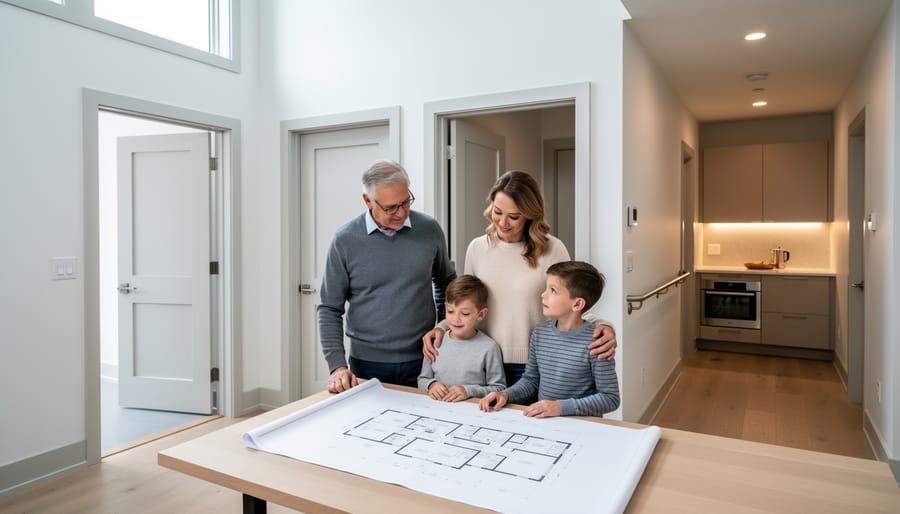
The multigenerational home renovation tax credit offers Canadian homeowners up to $50,000 in eligible expenses to create a secondary suite for an older adult or adult with a disability. This translates to a substantial financial break, potentially putting thousands back in your pocket when you build or renovate with family in mind.
But here’s what most articles won’t tell you: if you’re planning to build a custom home anyway, designing for multigenerational living from day one saves you significantly more than retrofitting later. We’ve worked with families who discovered that incorporating a secondary suite during initial construction costs 30-40% less than adding it after the fact. The tax credit sweetens an already smart decision.
Think about the Hendersons, who built their dream home with a main-floor suite for aging parents. They qualified for the tax credit while avoiding the disruption and premium costs of future renovations. Their builder designed proper soundproofing, separate entrances, and accessibility features into the original plans. Everything flowed naturally.
The timing matters too. This federal initiative recognizes a reality many families face: caring for aging relatives while maintaining independence under one roof. Whether you’re breaking ground on new construction or considering significant renovations, understanding how this credit works alongside thoughtful home design puts you ahead.
The question isn’t whether multigenerational living makes sense for your family. It’s whether you’ll approach it strategically, maximizing both the tax benefit and your long-term comfort.
What the Multigenerational Home Tax Credit Actually Covers
The multigenerational home renovation tax credit offers up to $7,500 to Canadian families who create a secondary dwelling unit within their home for a qualifying relative. This applies to parents, grandparents, adult children with disabilities, or adult children who are parents themselves. The credit covers 15 percent of eligible renovation expenses, capping at $50,000 in qualifying costs.
Here’s what counts: constructing a secondary suite with its own bedroom, bathroom, and kitchen facilities. You need a separate entrance, though it can be internal. The space must provide functional independence while remaining part of your primary residence. Structural changes, plumbing installation, electrical upgrades, and accessibility modifications all qualify.
What doesn’t qualify? Regular maintenance, appliances, and furnishings fall outside the MHRTC qualifying requirements. The government draws a clear line between creating new living space and simply updating existing areas.
For families building custom homes, timing matters significantly. If you’re still in the design phase, incorporating multigenerational features during construction typically costs 20 to 30 percent less than renovating an existing home later. The tax credit applies whether you’re adding to a current property or including these features in new construction, but the key lies in documentation.
The qualifying relative must live with you, or intend to within 12 months of completion. You’ll need permits for most projects, and your contractor should provide detailed invoices separating qualifying work from general construction costs. This documentation becomes essential when claiming the credit on your tax return.
Most families ask whether they should renovate now or build new with these features included. From a builder’s perspective, designing for multiple generations from the blueprint stage delivers better functionality and flow. The tax credit sweetens either approach, but starting fresh lets you optimize layout, privacy, and accessibility without working around existing structural limitations. You avoid the compromises that come with shoehorning a suite into spaces never meant for independent living.
Designing Multigenerational Spaces from the Blueprint Stage
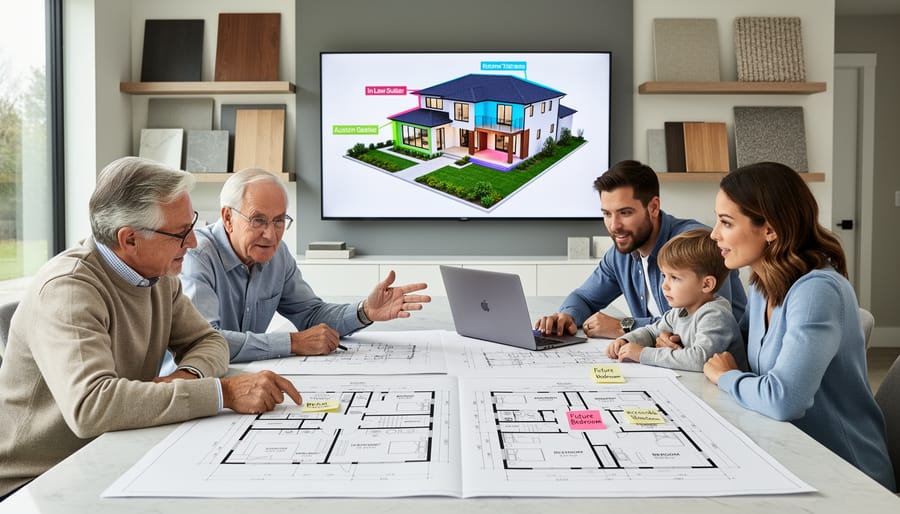
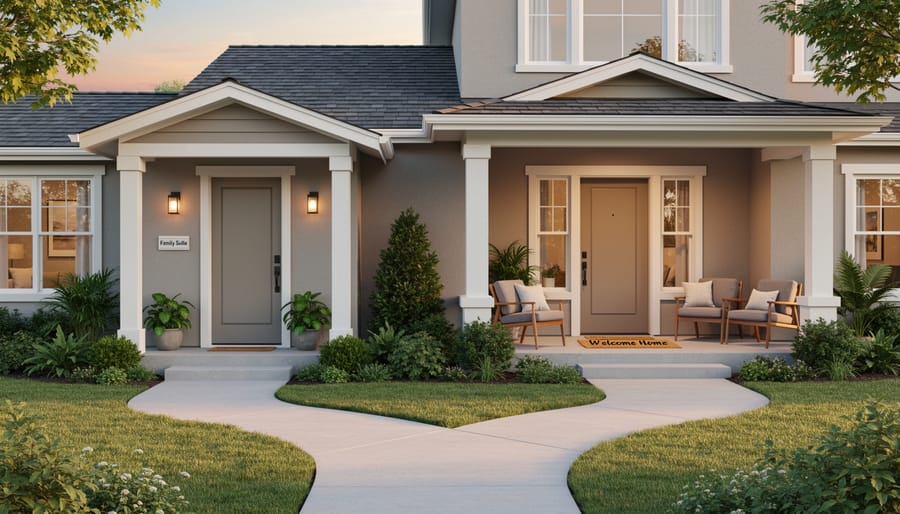
Creating Independent Living Quarters That Feel Connected
The secret to successful multigenerational living quarters lies in thoughtful separation that doesn’t feel isolating. When families come to us wanting space for aging parents or adult children, they’re balancing two competing needs: genuine independence and meaningful connection.
A well-designed in-law suite typically includes its own entrance, kitchenette, bedroom, and bathroom. But here’s what makes the difference, strategic placement. We’ve found that positioning these suites on the main floor with a connecting door to the primary residence works beautifully. Your parents can access their space without navigating stairs, yet join family dinner through an interior door when they choose. That choice matters more than most people realize.
Separate wings offer another approach, particularly for larger lots. One family we worked with created a connected layout where grandparents’ quarters shared a wall with the grandchildren’s playroom. The sound of kids playing became a daily joy rather than a disruption, and babysitting happened naturally without anyone feeling imposed upon.
The details count. Installing separate HVAC zones means everyone controls their own comfort. A small covered patio outside the suite creates outdoor space that feels personal. Even mailbox placement can reinforce independence, some families want two, others prefer one.
What doesn’t work? Converting basements into isolated apartments or tacking additions onto garages as afterthoughts. Those solutions scream “add-on” and rarely qualify for tax credits anyway. Building these spaces into your original design creates homes where multiple generations genuinely want to live, not just tolerate living.
Accessibility Features That Benefit Everyone
The smartest accessibility features do double duty. They accommodate aging parents right now while making your home more livable for everyone, regardless of age or ability.
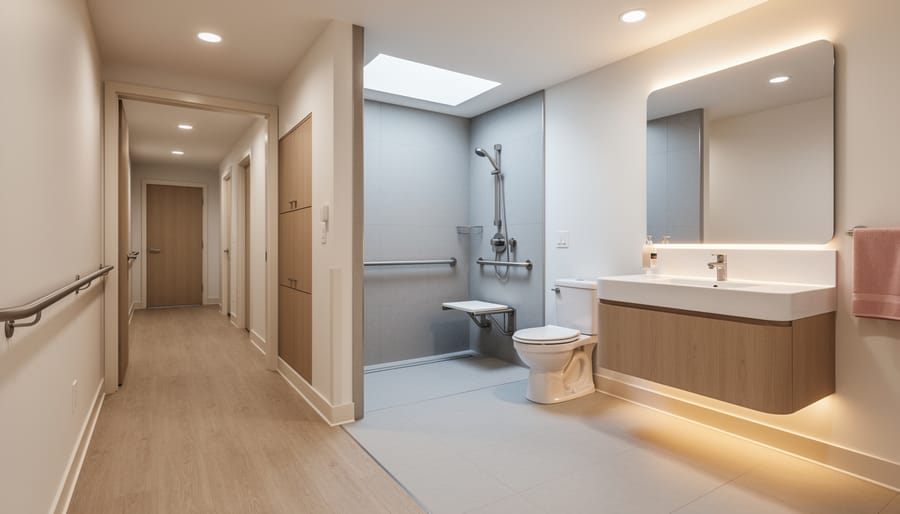
Wider doorways, 36 inches instead of the standard 32, let wheelchairs and walkers pass through easily, but they also make moving furniture simpler and create a more spacious feel throughout your home. Zero-step entries eliminate tripping hazards for toddlers and grandparents alike, while making grocery hauling infinitely easier for everyone in between.
Lever-style door handles and faucet controls work better than knobs when your hands are full or arthritis makes gripping difficult. Rocker light switches at accessible heights benefit kids learning independence just as much as they help aging adults.
In bathrooms, curbless showers with built-in seating and grab bars don’t look institutional when designed thoughtfully. They create spa-like spaces that serve multiple purposes. A handheld showerhead on a slide bar adjusts for users of different heights, from small children to tall adults to someone seated.
Even details like fireplace planning matter when considering accessibility, electric inserts at safe heights eliminate bending to tend wood fires while providing ambiance everyone enjoys.
These universal design elements typically add just 5-10% to construction costs when incorporated during the build phase, far less than retrofitting later. More importantly, they create a home that adapts to your family’s changing needs across decades, not just years.
How This Tax Credit Impacts Your Custom Home Budget
Understanding how the multigenerational tax credit affects your budget requires looking beyond the immediate rebate. While the credit offers up to $7,500 for qualifying secondary suites, the real financial story lies in how you integrate these features into your overall custom home cost from day one.
Most families discover that building multigenerational spaces during initial construction costs 30-40% less than adding them through renovation. The tax credit sweetens this advantage considerably. When you’re already paying for foundation work, framing, and major systems, extending those elements to accommodate an in-law suite adds incremental cost rather than starting from scratch.
| Feature | Typical Build Cost | Tax Credit Value | Net Investment |
|---|---|---|---|
| Secondary Suite (600 sq ft) | $75,000-$90,000 | $7,500 | $67,500-$82,500 |
| Accessible Bathroom | $15,000-$22,000 | Partial credit | $13,000-$20,000 |
| Separate Entrance + Kitchenette | $18,000-$25,000 | Partial credit | $16,000-$23,000 |
The numbers tell part of the story, but timing tells the rest. Families working with their builder during the design phase can strategically allocate the tax credit value toward upgraded finishes in multigenerational areas or additional accessibility features that exceed minimum requirements. This turns a government incentive into leverage for creating genuinely exceptional living spaces.
Budget-conscious families should discuss three key points with their builder: which specific features qualify for the credit, how to document everything properly for tax purposes, and whether phasing certain elements makes financial sense. Some families prioritize the core suite now and plan for future enhancements, while others maximize the credit by incorporating every qualifying feature from the start.
The long-term savings matter just as much as the upfront credit. When aging parents move into a well-designed suite, families often save $3,000-$5,000 monthly compared to assisted living costs. Even if the suite remains empty initially, having rental potential or future flexibility adds tangible value to your property. The tax credit effectively pays you to build financial resilience into your home’s design, which makes it one of the smartest investments in custom home planning right now.
Real Families, Real Solutions: Multigenerational Design in Action
The Martinez family knew they needed to act fast when Maria’s mother was diagnosed with early-stage Parkinson’s. Rather than scrambling to retrofit their existing two-story home, they contacted us about building a custom home designed for three generations from day one. “The tax credit made the numbers work,” Maria explains. “We’d been setting aside money for renovations, but building new with multigenerational features included from the start actually cost less than we expected when we factored in the credit.”
Their 2,400-square-foot home features a main-floor suite with a roll-in shower and wide doorways that accommodates Maria’s mother now while serving as a guest suite or future primary bedroom as the family ages. The separate entrance allows her independence without feeling isolated from her grandchildren. “She joins us for dinner every night, but she can retreat to her own space when she needs quiet,” Maria notes. The family also invested in solar panel testing and installation to reduce long-term utility costs across the larger footprint.
The Chen family took a different approach. With elderly parents moving from California and adult children planning to live at home through college, they needed flexibility. Their custom build includes two complete living quarters connected by a shared great room and kitchen. “We didn’t want separate kitchens initially, but our builder showed us how qualifying features like the second full bathroom with grab bars and the accessible bedroom suite would maximize our tax credit,” says David Chen. The $15,000 credit covered most of their upgraded flooring throughout the accessible areas.
What surprised both families most was how quickly these design choices became indispensable. The Martinezes’ zero-step entry works perfectly for bringing in groceries and strollers. The Chens’ wider hallways accommodate everyone from grandparents using walkers to college kids hauling equipment. “These aren’t special features anymore,” David reflects. “They’re just how our home works for real life, and the tax credit made choosing quality materials affordable.”
Working With Your Custom Builder to Maximize Tax Benefits
Your custom builder becomes your strategic partner in securing the multigenerational tax credit, not just your contractor. Start the conversation during your initial consultation, not after design work begins. Bring documentation of the credit requirements to your first meeting so your builder understands exactly which features need specific attention in the plans.
Timing matters more than most families realize. To qualify for the credit in a given tax year, you need to complete the work and obtain the necessary certificates before December 31st. If you’re planning to build in winterfactor in inspection schedules and potential weather delays that could push completion into the following year.
Here’s how to align your project timeline with tax credit requirements:
- Schedule your design consultation at least 12 months before you need the credit
- Request itemized quotes that separate qualifying features from general construction costs
- Build a documentation system from day one, saving all receipts, permits, and inspection reports
- Coordinate with your accountant before finalizing the design to confirm which features maximize your benefit
- Plan your construction schedule backward from December 31st, allowing buffer time for inspections and certificate processing
Ask your builder these specific questions: Can you provide separate line items for accessibility features and secondary suites? Which subcontractors have experience with compliance documentation? What’s your track record for on-time completion? Do you work with families who’ve claimed this credit before?
The best builders will connect you with past clients who navigated this process successfully. They’ll also coordinate directly with your tax professional to ensure the plans include proper documentation trails. This collaboration protects your investment and eliminates last-minute scrambling when tax season arrives.
The multigenerational home renovation tax credit represents more than a financial incentive, it’s a timely opportunity to build a home that honors your true family story while securing immediate tax benefits. Families who design for multiple generations from the blueprint stage create living spaces that adapt as needs change, combining accessibility with independence, privacy with connection.
Starting fresh with a custom build gives you advantages renovations simply can’t match: properly sized rooms, ideal layouts, and integrated features that look intentional rather than added on. You’ll avoid the compromises and hidden costs of retrofitting existing homes while creating a residence that serves your family for decades.
Now is the ideal moment to explore how thoughtful multigenerational design aligns with your family’s vision and budget. At Heartland Custom Homes, we specialize in translating these complex needs into homes that work beautifully for everyone under one roof. Let’s discuss how to design your multigenerational home in a way that maximizes both this tax credit and your family’s daily comfort for years to come.