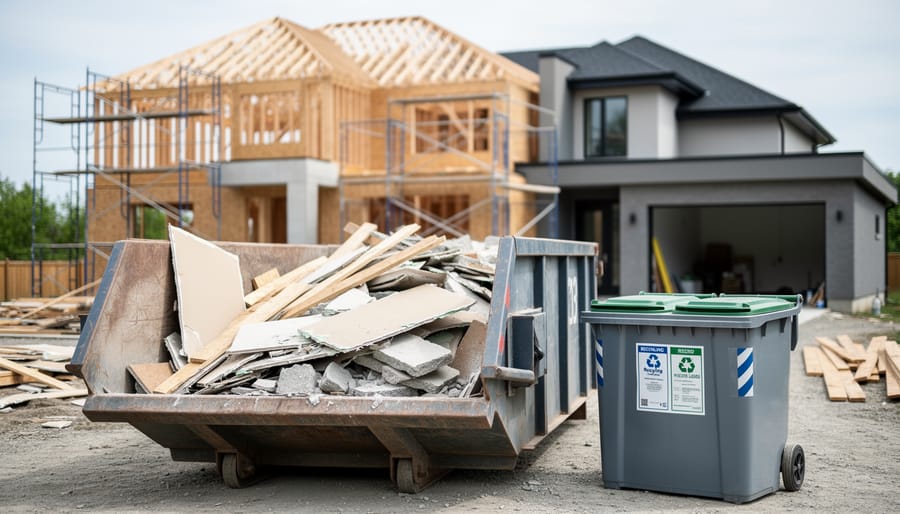
Managing construction waste properly means partnering with licensed transporters, budgeting 1-4% of your total build cost for disposal, and meeting local diversion requirements that now mandate at least 65% of debris be recycled rather than landfilled. When you construct your home understanding these practical and regulatory aspects upfront prevents costly surprises and ensures your project stays compliant from foundation to final walkthrough.
Most prospective homeowners don’t realize construction waste is one of the largest waste streams heading to landfills, yet it’s also one of the most challenging to recycle compared to everyday household items. The sheer volume matters. A typical custom home generates tons of material: lumber scraps, drywall offcuts, packaging, roofing remnants, and concrete fragments. Where this debris goes, how much it costs, and who handles it are questions you’ll need clear answers to before breaking ground.
The good news? Modern waste management has evolved beyond simply hauling everything to the dump. Recycling facilities now process construction and demolition debris at rates that often undercut traditional landfill fees. Self-hauling to these facilities can save even more, though most builders work with registered transporters who know the approved processing sites in your service area. These partnerships matter because regulations vary by region, and using the wrong disposal method or unlicensed hauler can halt your project.
At Heartland Custom Homes, we’ve guided families through every detail of the building journey, including the less glamorous but essential task of waste disposal. We build transparency into our estimates so you see exactly where your investment goes. Our clients appreciate knowing their dream home is built responsibly, with debris sorted, recycled where possible, and disposed of according to current standards. That attention to detail extends from design choices you’ll cherish to the behind-the-scenes logistics that keep your project moving smoothly.
The Hidden Reality: What Actually Gets Thrown Away During Your Custom Home Build
When you imagine building your dream home, you’re probably picturing hardwood floors, custom cabinetry, and thoughtfully designed spaces. But there’s another reality that unfolds on every construction site, one that most homeowners never see coming: the sheer volume of material that doesn’t make it into your finished home.
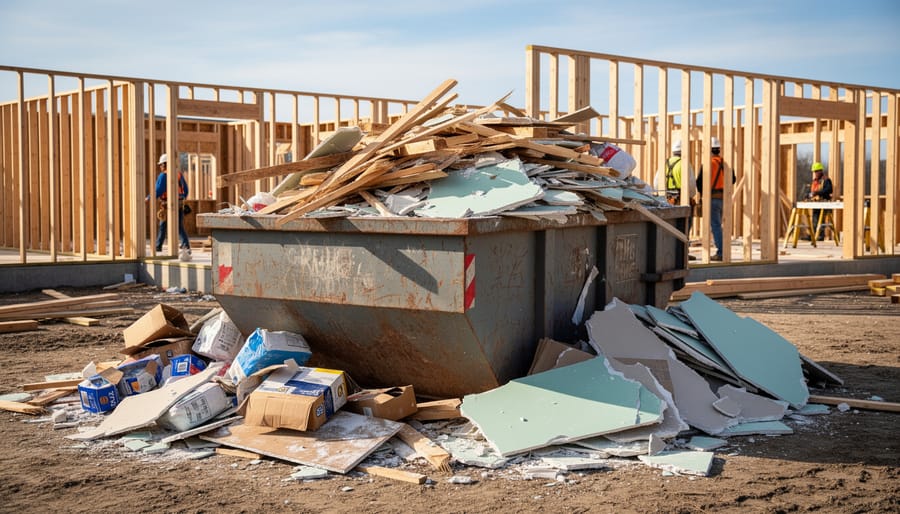
A typical custom home build generates between 3 and 7 tons of waste. That’s not a misprint. We’re talking about literal tons of material that needs to go somewhere once construction wraps up. Unlike the bottles and newspapers you toss in your recycling bin at home, construction and demolition debris accounts for a significant portion of waste going to local landfills, and it’s much more challenging to recycle than everyday household items.
What exactly fills those dumpsters? Here’s what accumulates during the building process:
- Wood scraps from framing, trim work, and cutting lumber to precise measurements
- Drywall offcuts and damaged sheets that can’t be installed
- Metal components including wiring remnants, ductwork scraps, and flashing pieces
- Concrete and masonry debris from foundation work and landscaping
- Roofing materials such as shingles, underlayment, and packaging
- Insulation materials that didn’t fit or were over-ordered
- Cardboard boxes, plastic wrap, and packaging from fixtures, appliances, and building materials
The packaging alone can surprise you. Every light fixture, sink, toilet, and appliance arrives wrapped in layers of cardboard and foam. Multiply that by dozens of items throughout your home, and you start to see how quickly it adds up.
What makes construction debris so different from household recycling? Size, contamination, and variety. A single discarded two-by-four can’t simply drop into a recycling bin. Drywall mixed with wood requires separation. Paint-covered materials often can’t be recycled at all. This complexity is exactly why thoughtful planning around waste disposal matters from day one of your build.
The Financial Impact: How Smart Waste Disposal Can Save You Money
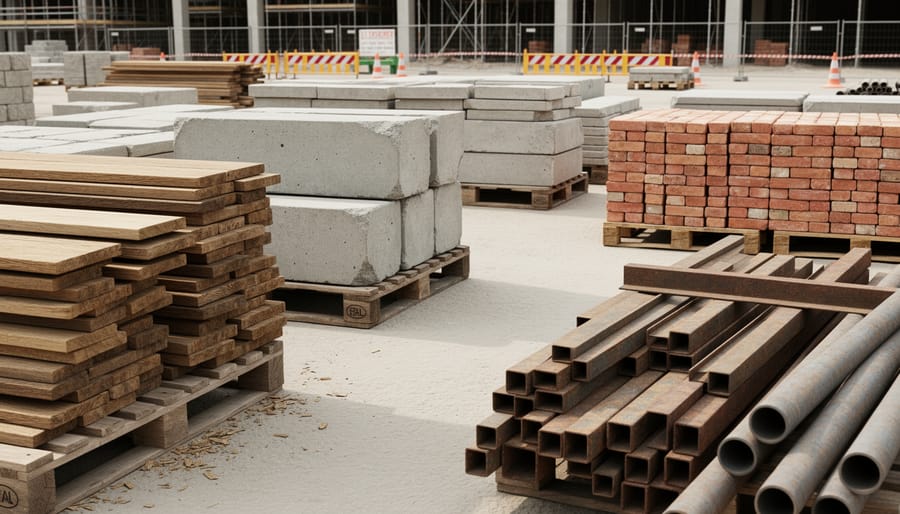
Construction waste disposal represents a meaningful line item in your building budget, but the cost varies dramatically depending on the approach you choose. Understanding these differences early in the planning process can help you make decisions that align with both your values and your wallet.
Traditional trash disposal services for construction debris typically charge by the container size and weight, with costs escalating quickly as your project generates more waste. Recycling services, by contrast, often offer lower rates because the materials retain some value. The City of Ontario C&D recycling services are cheaper than trash disposal, reflecting the economic reality that sorted materials can be processed and reused rather than simply buried in a landfill. This price difference alone can add up to hundreds or even thousands of dollars over the course of a custom home build, depending on the project’s scale and complexity.
Self-hauling material to a recycling facility could potentially save more, particularly if you have access to appropriate transportation and the time to make multiple trips. However, this approach requires careful consideration. You need to account for the value of your time, fuel costs, and the physical effort involved in loading and transporting heavy construction materials. For most custom home projects, the coordination required makes self-hauling impractical, but it remains an option worth evaluating during your planning conversations.
The real financial wisdom lies in planning ahead with your builder. When you discuss up front how costly is it to build your custom home, waste disposal should be part of that conversation. A builder who orders materials precisely, designs cuts efficiently, and works with responsible waste management partners will generate less waste overall. Those savings compound. You pay less for excess materials that end up in the dumpster, less for disposal services, and you avoid the hidden costs of project delays caused by cluttered work sites.
Quality and cost savings work together here rather than against each other. Thoughtful material management reflects the same attention to detail that produces superior craftsmanship throughout your home.
What You Need to Know About Regulations and Requirements
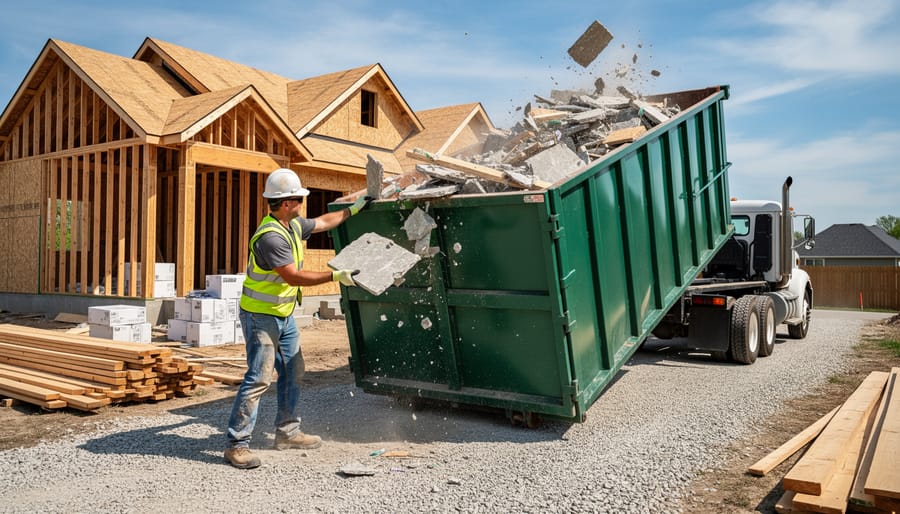
The regulatory landscape for construction waste disposal has evolved significantly in recent years, and understanding these requirements is essential before you break ground on your custom home. You’ll want to ensure your builder is not only aware of current regulations but actively planning to meet them from day one.
One of the most significant regulatory developments affects larger construction projects. The state now requires a minimum 65% diversion of construction and demolition debris from projects that exceed specified size or cost thresholds. This means that nearly two-thirds of the waste generated during your build must be diverted from landfills through recycling, reuse, or other approved methods. The threshold varies, but many custom home builds fall within the scope of this requirement, making it more than just an environmental consideration, it’s a legal obligation.
Beyond the diversion mandate, location matters significantly. If your project is within the RecycleSmart service area, you must use a RecycleSmart Registered C&D Transporter and an Approved C&D Processing Facility. This isn’t a suggestion, it’s a requirement. These regulations exist to ensure construction waste is handled properly and processed at facilities equipped to maximize recycling and appropriate disposal. Working with registered transporters also provides documentation that your project met its diversion requirements, which may be needed for final inspections or permits.
The complexity stems from the fact that construction and demolition debris accounts for a significant portion of waste going to local landfills, yet it’s much more challenging to recycle than bottles, cans and newspaper. Different materials require different handling, sorting, and processing methods. Concrete and asphalt can be crushed and reused, while wood may be chipped for landscaping or biomass fuel. Metals get sorted and sent to scrap facilities. This complexity is precisely why regulations specify approved facilities, they have the infrastructure to handle diverse waste streams properly.
Your builder should be familiar with local requirements and have established relationships with compliant waste management providers. This preparation ensures your project stays on schedule without scrambling to meet regulatory obligations mid-construction.
How Heartland Custom Homes Approaches Waste Management
At Heartland Custom Homes, waste management isn’t an afterthought, it’s woven into every phase of your build. We view responsible disposal as a direct reflection of the care we bring to your entire project.
Our approach starts at the design table. Before a single board arrives on site, we work closely with our suppliers to order materials with precision. This attention to detail means fewer offcuts, less packaging waste, and materials that arrive sized correctly for your specific floor plan. When you’re building a truly custom home, careful planning isn’t just about aesthetics, it prevents unnecessary waste from the start.
On the job site itself, our crews separate materials as they work. Wood scraps go in one container, metal in another, cardboard and packaging in a third. This isn’t just good environmental practice; it’s efficient construction. A well-organized site means our team can work faster and safer, which directly benefits your timeline and budget.
We’ve built strong relationships with waste management providers who share our commitment to responsible practices. These partnerships ensure that recyclable materials actually get recycled rather than simply hauled to a landfill. When your builder knows where the materials are going and how they’ll be processed, you can trust that your project aligns with your values.
What really sets our process apart is how waste reduction connects to overall quality. The same attention to detail that minimizes scrap lumber also ensures precise cuts, tighter joints, and better finishes throughout your home. When we measure twice and cut once, we’re simultaneously reducing waste and elevating craftsmanship.
Our clients often tell us they appreciate knowing that building their dream home didn’t mean creating mountains of unnecessary debris. We see waste management as part of our larger promise: to build homes that reflect not just your vision for the future, but your values in the present.
Your Role as a Homeowner: Questions to Ask Your Builder
Your builder’s approach to construction waste disposal reveals a lot about how they’ll handle your entire project. The right questions now can help you choose a partner who shares your commitment to responsible building practices.
Start by asking how they plan to minimize waste before construction even begins. A builder who carefully calculates material orders and thinks through cut layouts is demonstrating the same attention to detail they’ll apply throughout your build, whether they’re installing a fireplace insert or helping you test your solar panels after installation.
Ask specifically about their recycling commitments. Do they separate materials on-site? Which materials do they routinely recycle versus sending to the landfill? If your project exceeds the size or cost thresholds that trigger mandatory diversion requirements, how do they ensure compliance with the 65% minimum?
Find out who will handle disposal. Are they partnering with registered transporters and approved processing facilities? How do they document where materials end up? This matters both for regulatory compliance and for your peace of mind that waste is being managed responsibly.
Don’t hesitate to ask about costs. Will recycling services be itemized separately in your estimate? How do their disposal choices affect your bottom line?
These aren’t uncomfortable questions, they’re practical ones that any quality builder will welcome. The answers you receive will tell you whether this builder views waste management as an afterthought or as an integral part of delivering your dream home with integrity.
Building Your Dream Home Responsibly
Building a custom home is one of the most personal investments you’ll make, a space designed entirely around how your family lives, works and gathers. That vision doesn’t stop at floor plans and finishes. The care you bring to selecting materials, the attention to detail in every design decision, and yes, even how construction waste is managed all reflect what matters to you. Responsible waste disposal isn’t separate from building your dream home; it’s woven into the fabric of creating something you’ll be proud of for decades.
When you choose a builder who treats waste management as seriously as they treat craftsmanship, you’re aligning with someone who respects the full scope of what goes into your project. Just as you wouldn’t tolerate sloppy framing or careless electrical work, the way debris is sorted, recycled and disposed of speaks to the professionalism of your build team. It shows they understand that building responsibly means thinking beyond the immediate task, considering the environment, the community and the legacy your home represents.
This mindset extends to everything happening around your property. The same attention you’d give to lawn mower repairs or maintaining your existing home carries forward into how your custom build unfolds. Small choices accumulate into something larger, a home that genuinely reflects your values.
As you move forward, remember that waste management isn’t an afterthought or a burden to delegate and forget. It’s part of the conversation from day one, an opportunity to work with builders who share your commitment to doing things right. Your dream home deserves a building process that honors the vision you’ve worked so hard to define, from the first foundation pour to the last scrap of packaging hauled away.